The Morning Coffee Ritual That Resets Everything
There is a particular quality to the first ten minutes of a morning spent without a screen.
Not productive. Not efficient. Something quieter and easy to overlook — a kind of attention that has nowhere else to be. The water hasn't boiled yet. The grounds haven't bloomed. Nothing is asking to be answered.
That, more than the caffeine, is what the ritual actually delivers.
The Habit Nobody Schedules
Most mornings begin the same way for most people: phone first, feed first, someone else's thoughts before your own. Coffee, if it happens at all, happens as an afterthought — poured, then forgotten, then rediscovered cold an hour later at a desk.
What the Five Minutes Actually Do
Boiling water makes a sound that builds, rather than interrupts. Grounds, once wet, release a smell that changes by the second. The cup grows heavier as it fills. None of this asks for interpretation. None of it can be scrolled past.
This is the part that a feed cannot replicate — not stimulation, but presence. A few uninterrupted minutes where nothing requires a reaction, and attention has nowhere to go but the thing directly in front of it.
Why the Method Doesn't Matter
No specific brewing method outperforms another here. Instant, pour-over, a simple moka pot — the ritual is not about the equipment. What matters is the absence of input during those minutes: no messages to answer, no headlines to process, nothing waiting to be reacted to.
This is easy to dismiss as a small thing. It usually is. But small things repeated daily tend to set the tone for everything that follows them, and a rushed first ten minutes rarely produces a calm next ten hours.
The Version That Doesn't Count
Not every cup of coffee counts as the ritual. Coffee grabbed on the way out the door, coffee drunk while reading the news, coffee made while already half-answering messages on the other screen — these are just caffeine delivery. They may still taste fine, but they don't do the same work.
The distinction isn't about the coffee itself. It's about whether the mind was allowed to stay in one place while it was made. A ritual that happens alongside three other tasks stops being a ritual and becomes one more thing squeezed into an already full morning.
What Happens on the Days It Gets Skipped
Skip the ritual for a few days in a row, and the absence tends to show up in ways that are easy to misattribute. A shorter temper. A morning that feels like it started already behind. A sense of catching up rather than beginning.
None of this is really about missing caffeine. It's about missing the transition — the buffer that used to exist between sleep and demand, now gone, so the day's first input is someone else's request rather than a few minutes of nothing in particular.
Why It Resists Being Optimized
There's a temptation to speed the ritual up — a faster kettle, a pre-ground bag, a machine that does it in ninety seconds. Each of these solves a problem the ritual was never trying to solve. The five minutes were never the inefficiency. They were the entire function.
Optimizing them away removes the one part of the morning that wasn't designed to be efficient, and replaces it with one more task completed quickly, which is not the same experience at all.
What Settles By the Time the Cup Is Full
By the time the coffee is poured, something has usually shifted — not full alertness, but a kind of quiet that wasn't there five minutes earlier. That shift is the actual purpose of the ritual. The coffee is simply the reason it happens.
Even on mornings that start rushed, protecting those five minutes tends to pay for itself before noon — not because the day becomes easier, but because it starts from a steadier place.
The Boundary It Quietly Creates
Over time, the ritual stops being about the coffee at all. It becomes a boundary — a clear, repeatable line between whatever happened the night before and whatever the day is about to ask for.
It doesn't need to be elaborate to work. It only needs to be protected.

The Rule
Marrow doesn't operate on a clock. It opens at 7am like most cafes, but it closes whenever that day's batch of beans runs out — sometimes 11am, sometimes 2pm, never later than 3.
"We roast small batches, twice a week, just enough for a few days," says the owner, Priya Nandy. "Once it's gone, it's gone. I'm not going to serve you week-old beans just to keep the door open until five."
There's a chalkboard by the entrance updated every morning with a rough estimate — "should last until around 1pm today" — though it's treated more as a guess than a promise. Regulars have learned to stop checking their phones and just show up early.
The Roaster
In the back room, visible through a large window cut into the wall, sits a small drum roaster Nandy operates herself, twice a week, always before the shop opens to customers.
She bought it used, from a roaster who was retiring, and spent four months relearning her craft on it before serving a single cup to the public. "The machine has its own personality," she says. "It runs slightly hot on one side. I had to learn that the hard way, one ruined batch at a time."
The window isn't decorative — it's deliberate. Customers can watch the roasting happen, though Nandy rarely explains what she's doing unless someone asks first.
The Regulars
By 8am, the six stools along the counter are usually full, and most of the faces belong to people who've clearly done this before.
There's the nurse finishing a night shift who orders the same drink every time without needing to say it aloud. A pair of college students who split one pour-over between them most mornings, more for the ritual than the caffeine. An older man who used to run a hardware store two blocks over, now retired, who shows up not for coffee at all but for the ten minutes of conversation at the counter.
"I didn't set out to build a hangout," Nandy says. "I set out to control quality by controlling quantity. The community part just happened on top of that."
Why the Scarcity Works
There's a version of this business that could scale — more beans, longer hours, a second location. Nandy has been asked about it more than once.
"The second I roast enough to never run out, I stop tasting every batch as closely," she says. "The limit isn't a marketing trick. It's the only way I know how to guarantee what's in the cup."
Running out, in other words, isn't a failure of planning. It's the plan.
The number made itself, in that way.
The Temperature
96 degrees. Not lower, not higher.
Two degrees either side of that number is the entire margin Okafor works within — and inside that narrow window is where a cup either comes together or falls apart.
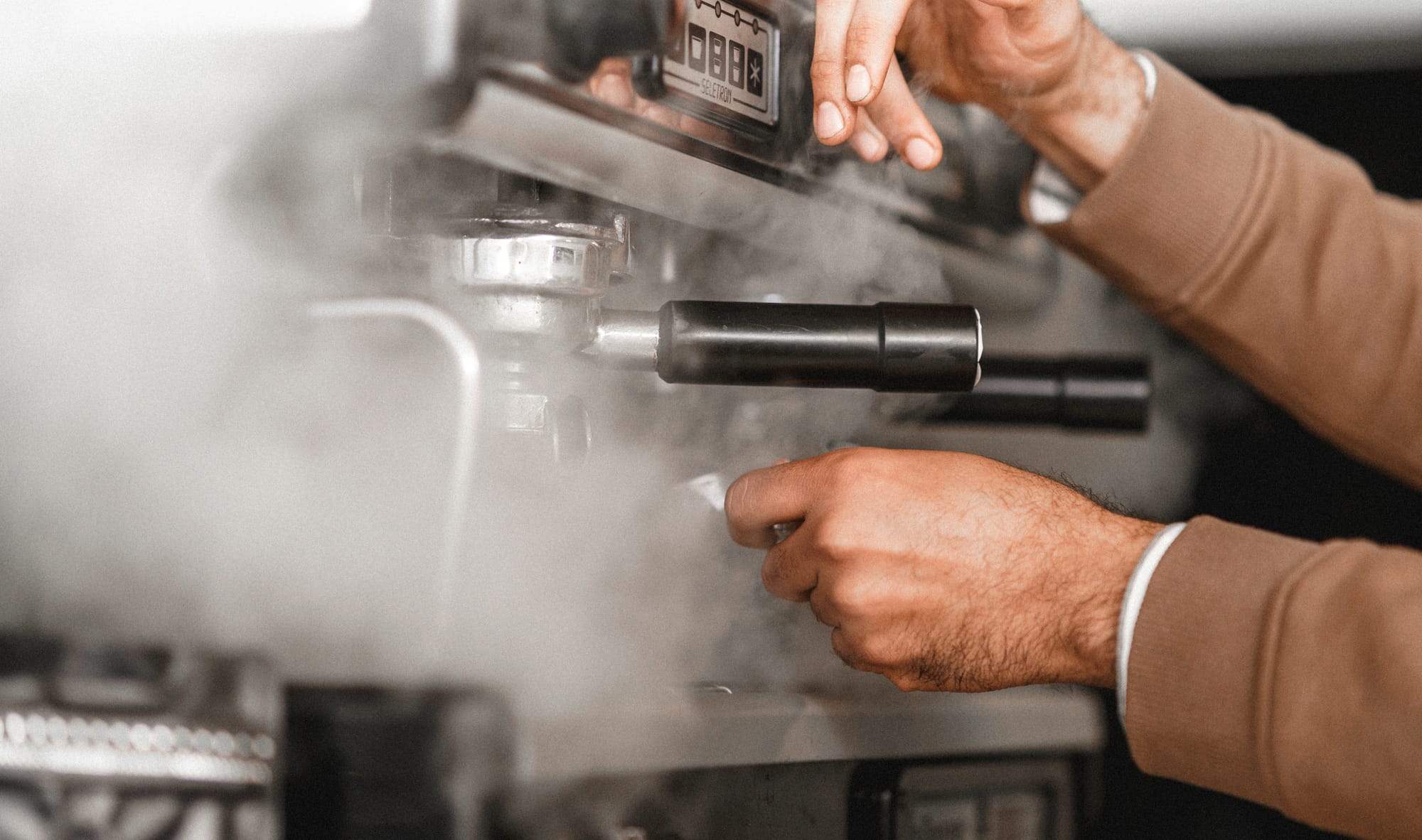
The business itself was built around that margin. Not as a gimmick, but as a genuine belief: the small stuff isn't background noise to a good cup of coffee — it is the cup. Water temperature. How fresh the grind is. What the milk tastes like that morning. Whether the machine was actually cleaned properly. Whether the person pulling the shot was paying attention.
Skip one of those, and it shows up in the taste, whether or not the customer can name what's off.
Get all of them right, and the result is worth the trip — worth waiting in line on a weekday morning, worth the shop being slightly out of the way, worth not finding your usual order on the board.
Worth showing up for again.